World Red Cross and Red Crescent Day
World Red Cross and Red Crescent Day: Humanity in the Heart of Crisis
War means grief, bodies, crime, and devastation everywhere. That much is obvious. What is astonishing, however, is the human spirit of those who emerge from the ruins of war and its traumatic memories to create peace and compassion.
This is the story of a merchant who accidentally arrived at the blood-soaked field of Solferino in northern Italy and, from that devastating encounter, helped shape a new chapter in human history. He transformed a great sorrow into a lasting mission: a global movement for humanity and peace that later became the foundation of the International Red Cross.
We will return to the life story of this remarkable man in a moment. But first, let us turn to one of the most important global observances in the month of May.
Every year on May 8, the world honors one of the largest humanitarian movements in history: World Red Cross and Red Crescent Day. This day is not only a reminder of the birth of Henri Dunant, founder of the International Committee of the Red Cross and the first recipient of the Nobel Peace Prize in 1901, but also an opportunity to appreciate the millions of volunteers and staff members across the world who work to reduce human suffering and protect human dignity.
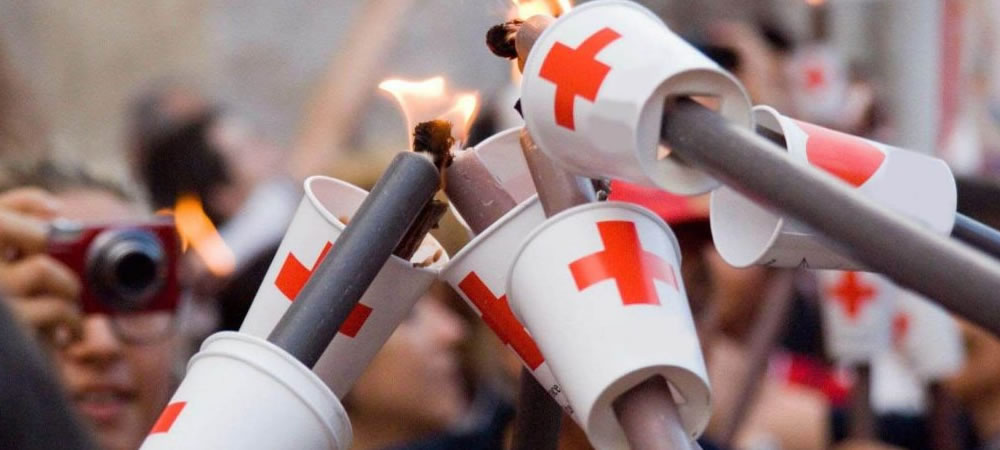
Where does the naming of World Red Cross and Red Crescent Day come from, and what connection does Nikan Mammut Charity have with this occasion and the humanitarian values it represents?
The History and Importance of World Red Cross and Red Crescent Day
The idea of setting aside a special day to honor the work of the Red Cross and Red Crescent emerged after World War I. In 1934, during the 15th International Conference of the Red Cross in Tokyo, the proposal for such a day was reviewed and approved.
However, it was not until 1948 that the day was officially observed on May 8, the birthday of Henri Dunant. Later, in 1984, the name was formally changed to World Red Cross and Red Crescent Day in order to recognize the role of Red Crescent societies as well.
But who was Henri Dunant, and what did he do that made his birthday worthy of such an important global observance?
The Man Who Turned the Memory of a Blood-Stained Battlefield into Human Compassion
On a hot summer afternoon in 1859, a Swiss businessman named Henri Dunant was traveling through northern Italy when he encountered a scene that changed not only the course of his journey, but also the fate of millions of people.
The Battle of Solferino fought between the allied forces of France and Italy against Austria had just ended. The vast plain before him was filled with bloodied bodies and the faint cries of wounded soldiers struggling between life and death. More than 40,000 soldiers, regardless of which army they belonged to, lay on the dusty ground with no one there to tend to their wounds.
Until that day, Dunant had been a businessman immersed in trade. But the scene affected him so deeply that it transformed not only his career, but his entire life. For several days and nights without rest, he worked alongside local village women to help the wounded French and Austrian, stranger and familiar alike. To him, they had only one identity: human beings.
Three years later, he wrote about what he had witnessed in a book titled A Memory of Solferino. But instead of simply mourning the tragedy, he proposed two revolutionary ideas:
- the creation of volunteer relief organizations in different countries
- an international treaty to protect wounded soldiers during war
Within less than a decade, Dunant’s ideas became reality. In 1864, the First Geneva Convention was signed by 12 countries, and the Red Cross entered history as a symbol of neutrality and humanity.
Henri Dunant later received the first Nobel Peace Prize, but his most valuable legacy still lives on in the red and white flags of the Red Cross and Red Crescent flying over the fires of war.
The Fundamental Principles of the Global Movement
The international Red Cross and Red Crescent movement is built on principles that guide its work across the world:
Humanity
To prevent and alleviate human suffering and to protect human dignity.
Neutrality
Not taking sides in hostilities or political, racial, religious, or ideological disputes.
Impartiality
Providing aid without discrimination based on nationality, race, religion, class, or political beliefs.
Independence
Maintaining autonomy from governments and other institutions.
Voluntary Service
Offering humanitarian service without seeking financial gain.
Unity
Allowing only one Red Cross or Red Crescent society in each country.
Universality
Promoting solidarity and cooperation among all national societies worldwide.
The Role of Volunteers in Global Crises
Red Cross and Red Crescent volunteers stand at the front lines of emergencies, conflicts, and natural disasters. In recent years, their role has been particularly visible in different parts of the world:
Gaza
Palestine Red Crescent volunteers have provided medical and humanitarian support under extreme conditions created by conflict.
Sudan
Following internal conflict, Sudan Red Crescent volunteers have delivered relief assistance and support for displaced families.
Morocco
After devastating earthquakes, Red Cross and Red Crescent volunteers took part in emergency relief and the rebuilding of affected communities.
Canada
During widespread wildfires, Canadian Red Cross volunteers helped evacuate communities and support those affected.
The Risks and Dangers Facing Humanitarian Workers
Red Cross and Red Crescent aid workers often face serious danger while carrying out their mission.
In 2024, more than 382 aid workers lost their lives around the world, including 32 members of Red Cross and Red Crescent societies. These figures reflect the growing dangers facing humanitarian workers in conflict zones and crisis-affected areas.
The Theme for 2026: United for Humanity
After the 2025 theme, “Keeping Humanity Alive,” this year’s message is “United for Humanity.” These themes emphasize the importance of preserving human dignity and supporting aid workers across the globe.
At a time when humanitarian crises are increasing, this message reminds us of our shared responsibility to stand by those who work on the front lines of relief.
For us as Iranians a people who have witnessed and deeply felt two devastating wars in less than a year these global calls for peace now carry even greater meaning. In these difficult days, many people in Iran have once again experienced the destructive and anti-human reality of war. And yet, on the other side of that devastation, many of these same people stepped forward voluntarily to reduce the suffering caused by conflict.
Nikan Mammut Charity knows well that the destructive effects of war weigh even more heavily on underprivileged families. Alongside the emotional pain of conflict, these families also struggle with worries about bread, shelter, and survival. With this understanding, Nikan Mammut Charity worked even harder throughout the days of war to reduce its harmful effects on the vulnerable families and beneficiaries under its care.
In days filled with fear, missiles, and the trembling ground of a bombed homeland, Nikan remained active more committed than ever to ease the burden on low-income families and ensure that no beneficiary was left alone.
How Can People Participate?
There are many ways individuals can support the work of the Red Cross and Red Crescent:
Become a Volunteer
Join a national society and offer your time and skills in different fields.
Donate Financially
Support humanitarian programs and relief projects through financial contributions.
Raise Awareness
Share information about the goals and work of the movement through media and social platforms.
Take Part in Events
Participate in activities such as blood donation drives, first aid training, and awareness campaigns.
The Role of Education and Awareness in Local Communities
One of the key areas of Red Cross and Red Crescent work is educating communities about crisis response and strengthening resilience.
Through first aid workshops, disaster preparedness programs, and public health education, these societies help local communities become more capable and better prepared. The training provided by volunteers can often mean the difference between life and death in times of crisis.
In many countries, especially in vulnerable areas, people learn through Red Cross and Red Crescent programs how to protect themselves and their families against earthquakes, floods, infectious diseases, and fires. These efforts not only save lives, but also increase confidence and independence within communities.
Cooperation with Charities and International Organizations
One of the most important reasons behind the effectiveness of the Red Cross and Red Crescent movement is its broad cooperation with other humanitarian organizations, charities, and governmental and non-governmental institutions.
Such cooperation is especially critical in major crises such as wars, natural disasters, and pandemics.
For example, during the COVID-19 outbreak, the Red Cross worked closely with the World Health Organization, UNICEF, and many international charities to deliver health services, vaccine distribution, and preventive education around the world.
In places such as Yemen, South Sudan, and Ukraine, collaboration between the Red Cross and organizations such as Doctors Without Borders, the World Food Programme, and refugee agencies helped millions gain access to urgent aid, food, medicine, and shelter.
These partnerships are powerful examples of global solidarity in defense of human dignity.
The Role of the Red Crescent in Psychological and Emotional Support
Alongside physical and medical assistance, the Red Cross and Red Crescent also play an important role in psychological support for those affected by war, disasters, and loss.
The experience of conflict, natural disaster, or losing loved ones leaves deep emotional wounds. Without proper support, these can lead to long-term trauma. Trained professionals and volunteers within these societies help children, adults, and families cope with emotional distress, rebuild a sense of safety, and regain hope.
This aspect of humanitarian work is often less visible, but it is absolutely essential for rebuilding lives after crisis.
Inspiring Stories from the Heart of Humanitarian Work
Across the world, there are hundreds of thousands of inspiring stories of volunteers who, despite poverty, danger, or even threats to their own lives, have rushed to help others.
- In India, Red Crescent and relief volunteers travel for days to reach remote areas and vaccinate children.
- In Afghanistan, women volunteers continue to provide health education and care for women in villages despite severe limitations.
- In the Philippines, volunteers have worked with local charities to build homes for people left homeless after destructive storms.
These stories reveal the true face of humanity and prove that even in the darkest conditions, human compassion is still alive.
The Future of the World Red Cross and Red Crescent Movement
The global Red Cross and Red Crescent movement faces new challenges in the modern world: recurring wars, climate change, mass migration, emerging diseases, and prolonged conflicts.
Yet with more than 150 years of experience, a coherent global structure, and a vast network of dedicated volunteers, the movement remains ready to respond.
Technology is also now serving this mission. The use of drones to assess damaged areas, first aid training apps, and early warning systems are all among the innovations that have become part of this global network’s work in recent years.
World Red Cross and Red Crescent Day is not just another date on the calendar. It is the expression of a lasting commitment to human values. It is not only a remembrance of past sacrifice, but also a call for the present and the future a call for empathy, cooperation, and humanity.
Let us take part through awareness, support, and action, and do our share to keep humanity alive.
Nikan Mammut Charity: Walking Beside the Red Crescent, Standing with the People
In recent years, Iran has faced many natural disasters, including the earthquakes in Sisakht, Andika, and Hormozgan Province in تیر 1401 (July 2022), as well as several destructive floods in Khuzestan, Sistan and Baluchestan, and other regions.
In these critical situations, Nikan Mammut Charity has consistently stood by affected communities through direct and ongoing cooperation with the Iranian Red Crescent Society, playing an effective role in relief operations.
This close partnership has enabled Nikan Mammut Charity to deliver public donations to real families in need with speed, accuracy, and official coordination.
One notable example of this cooperation was the reconstruction of more than 50 homes in the earthquake-affected areas of Sisakht a joint effort made possible through the generosity of donors and careful coordination alongside the Red Crescent.
After the Hormozgan earthquake, Nikan Mammut Charity, with the help of the Red Crescent and the support of donors, also provided cooling appliances for affected families so they could endure the intense southern heat with greater comfort in the aftermath of disaster.
These repeated and successful experiences show that synergy between people-based institutions such as Nikan Mammut Charity and formal relief organizations such as the Red Crescent is essential for effective humanitarian action and greater public trust.
Relying on this cooperation, Nikan Mammut Charity has always tried to remain close to the people, especially in the heart of crises as a source of hope and a support for rebuilding lives.
The Nikan Charity team is always ready to hear from you and welcome your involvement – simply visit the Contact Us section to get in touch.
Comments
What is you comment about this article?