How Charities Can Keep aid supply chains during war
- New Approaches to Food and Water Distribution in Times of War
- The Crisis Facing Vulnerable Families in Wartime
- The Role of Charities in Maintaining aid supply chains during war
- Nikan’s Role in Difficult Days for Iranian Families
- Stand with Nikan in Supporting War-Affected Families Toward Self-Reliance
New Approaches to Food and Water Distribution in Times of War
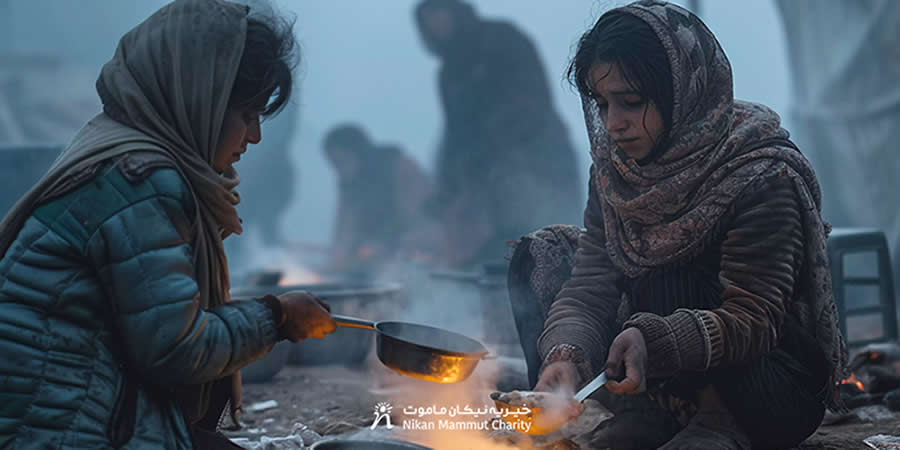
In less than a year, people in Iran have endured two major and exhausting wars from large-scale air attacks and loss of life to destruction caused by bombardment and the displacement of thousands of families. Before the dust from one crisis had fully settled, another war arrived, leaving fresh devastation on top of previous wounds. The future remains uncertain and deeply stressful.
In such times, managing access to food and water for vulnerable communities is no longer a matter of choice; it is a matter of survival.
For more than fifteen years, Nikan Mammut Charity has supported low-income families through seasonal food distribution, emergency response in disasters such as floods and earthquakes, and long-term self-reliance programs. Today, Nikan faces a difficult and urgent question: how can this path continue, while also responding to the needs of vulnerable families newly affected by war?
But there is an even more fundamental question at the heart of this article: How can charities preserve their support systems and keep aid supply chains during war chains functioning during war without interruption?
The answer lies in changing methods, learning from lived experience, and designing new models for food and water distribution in times of conflict.
Before exploring those solutions, it is important to look at the current reality facing vulnerable families in Iran, as well as Nikan’s experience over the years.
Join Us in Supporting Vulnerable Families
The Crisis Facing Vulnerable Families in Wartime
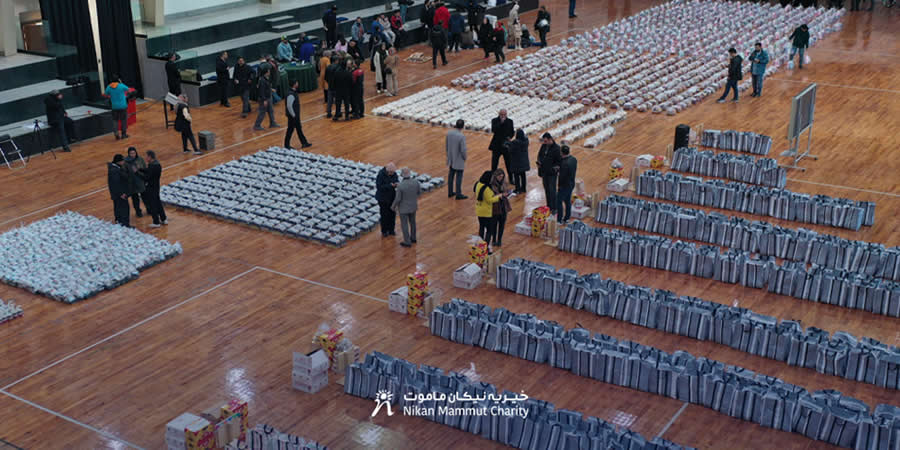
War is hard for everyone. But for a family that was already living with very little, conflict, insecurity, and economic pressure can push life to the edge.
In wartime, three problems often hit vulnerable households at the same time:
- Insecurity, which cuts off or limits access to shops, bakeries, and daily essentials
- Sharp price increases in food and safe drinking water due to disruptions in transportation and supply routes
- Psychological exhaustion, which reduces the ability of women, older adults, and low-income families to search for help or secure basic necessities
Within just a few months, people in Iran have lived through two painful and distinct wartime experiences: first, a 12-day war; then a more severe 40-day conflict. These back-to-back crises have left vulnerable families even more exposed.
For such households, the trauma of war is not the only danger. Economic pressure becomes a crisis of its own. Official statistics also point to the severity of the damage from inflation reaching around 70 percent to a rising burden of psychological distress and mental health problems.
In such a situation, hunger and lack of safe water may claim lives even faster than weapons do.
That is why any humanitarian plan in wartime must begin with food and water resilience for the most vulnerable. Only after the immediate crisis has passed can longer-term pathways toward self-reliance resume.
The Role of Charities in Maintaining aid supply chains during war
As noted above, during wartime many people naturally assume that governments alone are responsible for providing food and water. Yet experience has shown that in the first days of crisis, state systems may face delays or inefficiencies as attention is diverted to defense and security.
This is where the role of charities changes fundamentally. They are no longer merely complementary actors. In many cases, they become an essential lifeline.
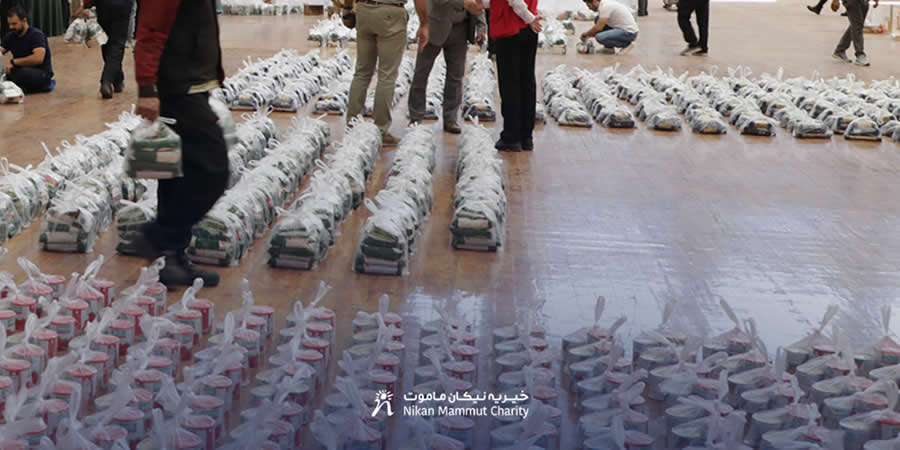
With flexible structures, broad volunteer networks, and direct knowledge of vulnerable families, charities can reconnect supply chains precisely where official systems have broken down.
The key question, however, is this: How can charities keep operating without interruption?
Based on guidance reflected in humanitarian practice and UNICEF-related approaches, four key strategies stand out:
- Create Emergency Stockpiles in Multiple Locations
Food and water reserves should be stored in several separate sites rather than in one central warehouse. If one site is damaged or becomes inaccessible, others can continue functioning.
- Use Alternative and Decentralized Transport Methods
Instead of relying only on large transport systems, charities can use motorcycles, bicycles, and even traditional local transport methods, especially in hard-to-reach or unstable areas.
- Build Local Agreements with Community Providers
Partnerships with bakers, small grocery shops, and water tank suppliers can make emergency distribution faster and more practical. Pre-arranged voucher or coupon systems can help families access essentials quickly.
- Prioritize the Most Essential Items
In the first days of war, distribution should focus only on what is most urgently needed: safe drinking water, dry bread, and high-energy canned foods not non-essential goods.
In addition, charities can also serve as both monitors and coordinators. They can identify where government distribution is weak, report gaps transparently, and help improve coordination on the ground.
Nikan Mammut Charity’s experience in crises such as floods and earthquakes has shown that charities with existing local distribution networks can sometimes deliver first-response aid supply chains during war in less than 24 hours, while some official institutions may take days.
This demonstrates an important truth: the social capital of charities matters just as much as money and infrastructure. It is built on public trust.
Nikan’s Role in Difficult Days for Iranian Families
Long before its work became connected with families affected by war, Nikan Mammut Charity had already spent years helping vulnerable households move toward self-reliance through seasonal food packages, treatment support, skills training, and livelihood development.
What sets Nikan apart from many similar organizations is its long-term vision. Nikan does not seek to keep families dependent on temporary aid supply chains during war. Instead, it consistently works toward empowerment and sustainable pathways out of poverty.
In simple terms, Nikan supports beneficiary families through seven main areas of service, all designed to help households move toward independence and stability.
During recent air attacks and the economic and social insecurity that followed, Nikan showed that this model works.
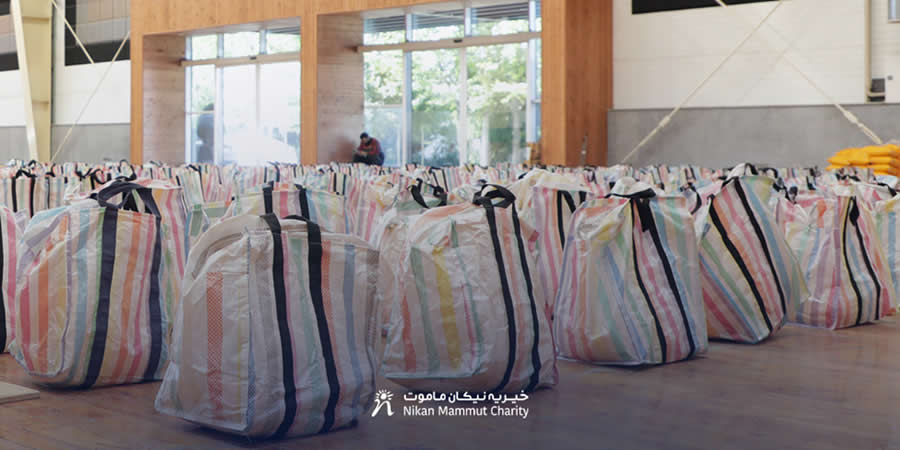
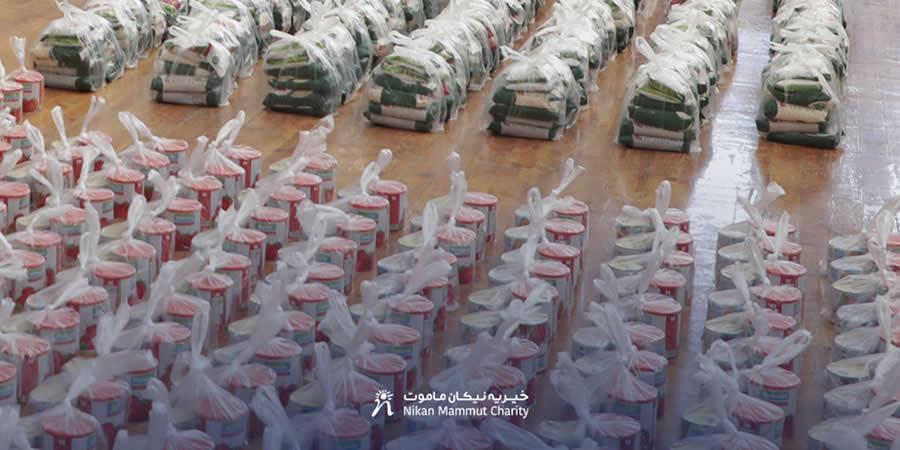
As an immediate step, Nikan used its existing network of beneficiary families and local volunteers in different cities to deliver food packages to households under its care.
More importantly, even during bombardment and instability, Nikan did not suspend its virtual self-reliance training programs. Beneficiaries who had previously learned skills such as sewing or mushroom cultivation were able not only to support themselves, but in some cases to create work opportunities for neighbors as well.
In difficult times, Nikan has shown that the continuity of aid supply chains during war depends not only on distribution systems, but also on the internal resilience of families themselves.
During both wars of the past year, Nikan did not interrupt its support even for a single day in part because it had already helped transform beneficiary households into small local points of resilience and distribution.
This is the kind of innovation in crisis management that can turn a charity into a strategic social institution.
Stand with Nikan in Supporting War-Affected Families Toward Self-Reliance
You may ask: in a time of war, when many of us are living with fear and insecurity ourselves, how can we help others?
The answer is not simple but it is precisely in difficult times that solidarity and social responsibility matter most.
Nikan Mammut Charity has created ways for people to help without needing to be physically present in conflict-affected areas. Through Nikan’s news platform and public calls for support, you can participate in aid supply chains during war efforts, register as a volunteer or supporter, or contribute a monthly amount even the equivalent of a single meal to support humanitarian and self-reliance projects.
And these are only some of the ways to stand with Nikan. By visiting the charity’s communication channels, you can learn about many other methods of support.
We should not underestimate the power of small acts of solidarity. These simple forms of support help ensure that if an air attack happens tomorrow, a food parcel may still reach the table of a single mother living on the margins of the city the day after.Support is not only financial.
You can also become part of this chain through your own skills from driving and warehouse support during crises to online teaching or psychological counseling.
After enduring successive wars in the past year, and with the future still uncertain, standing with Nikan means saying:
We will stand against hunger and thirst in times of crisis, even when the sky is not safe.
Now is the time to look again at what matters most to us. If helping others is not yet at the top of that list, join hands with us and bring it there.
Nikan is waiting for your companionship and support and the distance to becoming part of Nikan is not far.
Comments
What is you comment about this article?